

What the First Crack and Second Crack Tell You About Your Roast
If you’ve started roasting coffee at home, you’ve probably heard people talk about “first crack” and “second crack.” These aren’t just milestones, they are the most important audio cues that tell you what’s happening inside your beans.
Understanding first crack and second crack in coffee roasting is the difference between guessing and actually controlling your roast.
Whether you're using the Fresh Roast SR540 or the SR800, learning to recognize and react to these stages will dramatically improve your results.
In this guide, we’ll break down:
- What first crack and second crack actually are
- What they sound like and look like
- When to stop your roast based on your goals
- How airflow and heat settings affect crack timing
- Practical tips specifically for Fresh Roast users
What Is First Crack in Coffee Roasting?
The Science Behind First Crack
First crack happens when internal pressure builds inside the coffee bean due to heat and moisture.
As the bean heats up:
- Water turns to steam
- Gases expand
- The bean structure weakens
Eventually, the bean physically cracks open, releasing pressure.
This is called first crack, and it marks the transition from:
👉 “raw” coffee → drinkable roasted coffee
What First Crack Sounds Like
First crack sounds like:
- Light popping
- Similar to popcorn, but softer and less explosive
It typically occurs around:
- 4–6 minutes (SR540)
- 5–7 minutes (SR800 depending on batch size)
What First Crack Means for Flavor
At first crack:
- Acidity is still high
- Origin flavors are strongest
- Body is lighter
This is where light roasts live.
What Is Second Crack?
The Science Behind Second Crack
Second crack is a deeper stage of roasting where:
- Cell walls break down further
- Oils begin migrating to the surface
- Carbon structure starts to degrade
This is not just expansion, it's structural breakdown.
What Second Crack Sounds Like
Second crack sounds like:
- Faster, sharper snapping
- More like Rice Krispies than popcorn
It is:
- Quieter than first crack
- More rapid and continuous
What Second Crack Means for Flavor
At second crack:
- Acidity drops significantly
- Bitterness increases
- Body becomes heavier
- Roast flavors begin to dominate origin
This is where dark roasts live.
First Crack vs Second Crack: The Key Difference
Here’s the simplest way to understand it:
- First Crack = Bean expansion and release of moisture
- Second Crack = Breakdown of bean structure and oils emerging
Between these two stages is where most ideal roasting happens.
When Should You Stop Your Roast?
This is the most important practical question.
Stop at First Crack → Light Roast
- Bright, fruity, complex
- Best for pour-over or lighter profiles
- Stop shortly after crack finishes
👉 Ideal for:
- Ethiopian beans
- Kenyan beans
Stop Between Cracks → Medium Roast
- Balanced acidity and body
- Slight sweetness and caramelization
- Most “crowd-pleasing” roast
👉 Ideal for:
- Colombian
- Guatemalan
Stop During Second Crack → Dark Roast
- Bold, smoky, heavy
- Low acidity
- Oil begins appearing on beans
👉 Ideal for:
- Espresso lovers
- Sumatran beans
How Airflow Affects First and Second Crack
This is where Fresh Roast machines really shine.
Why Airflow Matters
Airflow controls:
- Heat distribution
- Bean movement
- Rate of development
Higher airflow:
- Slows roast slightly
- Promotes even roasting
- Delays cracks
Lower airflow:
- Increases heat intensity
- Speeds up development
- Brings cracks earlier
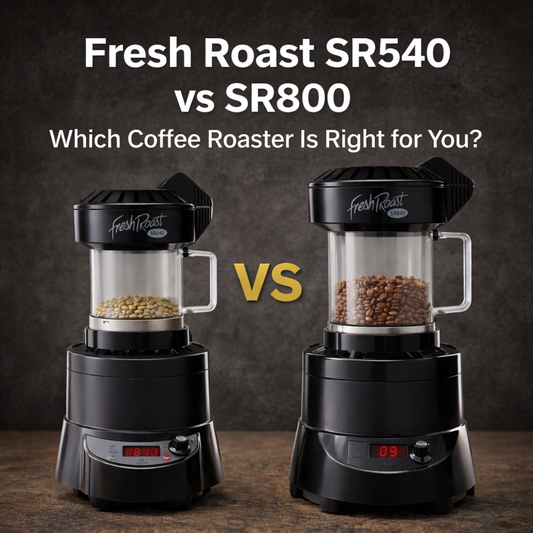
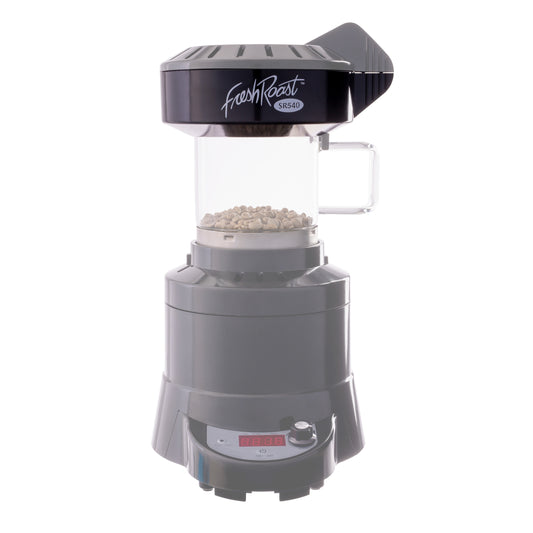
Using First and Second Crack with the SR540
👉 Fresh Roast SR540
Recommended Approach
- Start with higher fan (7–9)
- Medium heat
- Listen closely for first crack
Tips
- Use airflow to keep beans moving evenly
- Reduce heat slightly after first crack
- Stop based on sound, not just time
Because of smaller batches, the SR540:
- Reaches crack faster
- Requires quicker adjustments
Using First and Second Crack with the SR800
👉 Fresh Roast SR800
Recommended Approach
- Slightly lower fan initially (due to stronger motor)
- Gradually adjust airflow as beans expand
- Track time to first crack carefully
Benefits
- More stable roast curve
- Easier to extend development time
- Better control between cracks
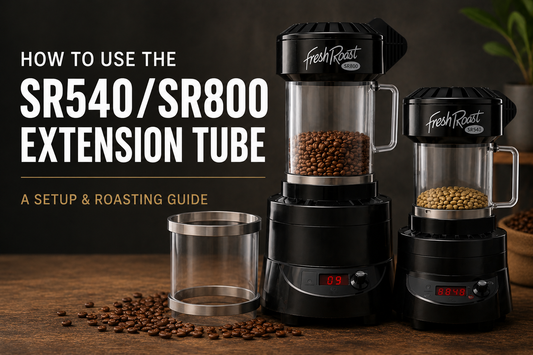
How the Extension Tube Changes Crack Timing
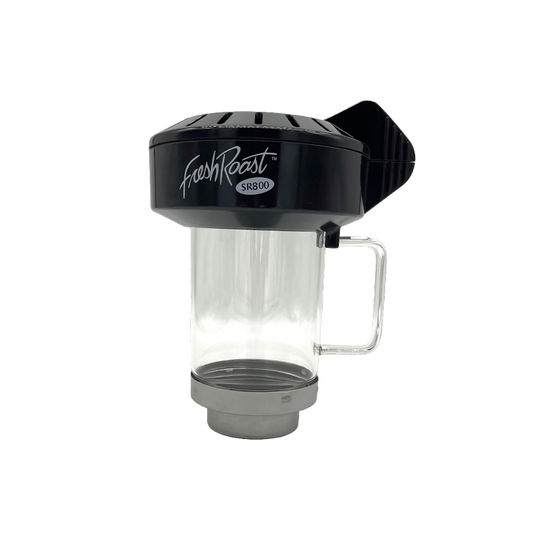
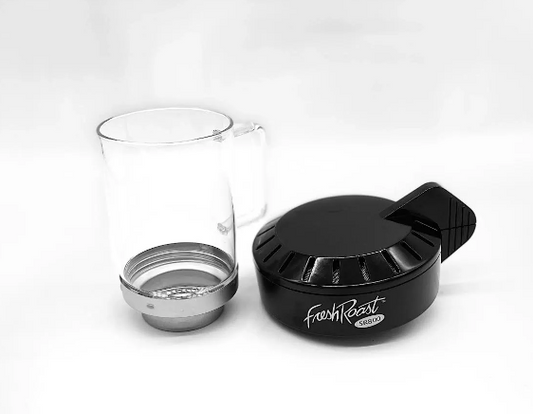
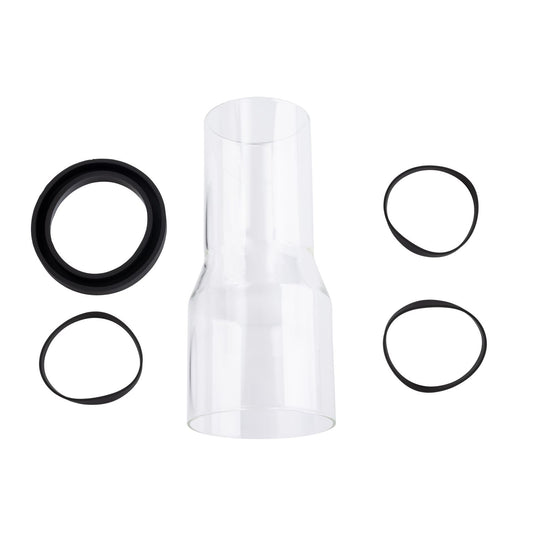
👉 Fresh Roast Extension Tube
The extension tube is one of the most impactful upgrades.
What It Does
- Increases roast chamber height
- Improves bean circulation
- Enhances airflow consistency
Impact on First and Second Crack
- Cracks become more consistent
- Roast develops more evenly
- Easier to control timing
For many users, the extension tube:
👉 Makes crack detection more predictable
5 Practical Tips for Mastering First and Second Crack
1. Always Roast by Sound, Not Just Time
Time is helpful, but sound is more accurate.
2. Reduce Heat After First Crack
This prevents overshooting into second crack too quickly.
3. Don’t Chase Dark Roasts Too Early
Beginners often push too far. Focus on mastering light and medium first.
4. Roast the Same Bean Multiple Times
This helps you learn how cracks behave with consistency.
5. Keep Notes on Every Roast
Track:
- Time to first crack
- Time between cracks
- Final flavor
This builds real skill quickly.
Common Mistakes to Avoid When Roasting Your Own Coffee Beans
Missing First Crack Entirely
If you didn’t hear it, you’re guessing.
👉 Fix: Roast in a quieter environment.
Going Too Far Into Second Crack
This leads to:
- Burnt flavors
- Loss of origin character
Not Adjusting Airflow
Airflow is one of your most powerful tools.
FAQs
Is first crack required for drinkable coffee?
Yes. Without first crack, the beans are underdeveloped and taste grassy.
Can you stop before second crack?
Absolutely. Most specialty coffee is roasted before second crack.
Why can’t I hear the cracks?
Background noise or high airflow can mask the sound. Try roasting in a quieter space.
Do all beans crack the same?
No. Density and origin affect:
- Timing
- Volume
- Intensity
Conclusion
Understanding first crack and second crack in coffee roasting is one of the most important skills you can develop as a home roaster.
These moments are your guide:
- First crack tells you the coffee is ready to drink
- Second crack tells you you're entering darker territory
With tools like the SR540, SR800, and the extension tube, you have everything needed to control your roast with precision.
Start listening closely, take notes, and experiment. That’s how great roasting habits are built.
Tags:
Previous
Fresh Roast SR540 vs SR800: Which Coffee Roaster Is Right for You?
Next
How to Use the SR540/SR800 Extension Tube: A Setup & Roasting Guide